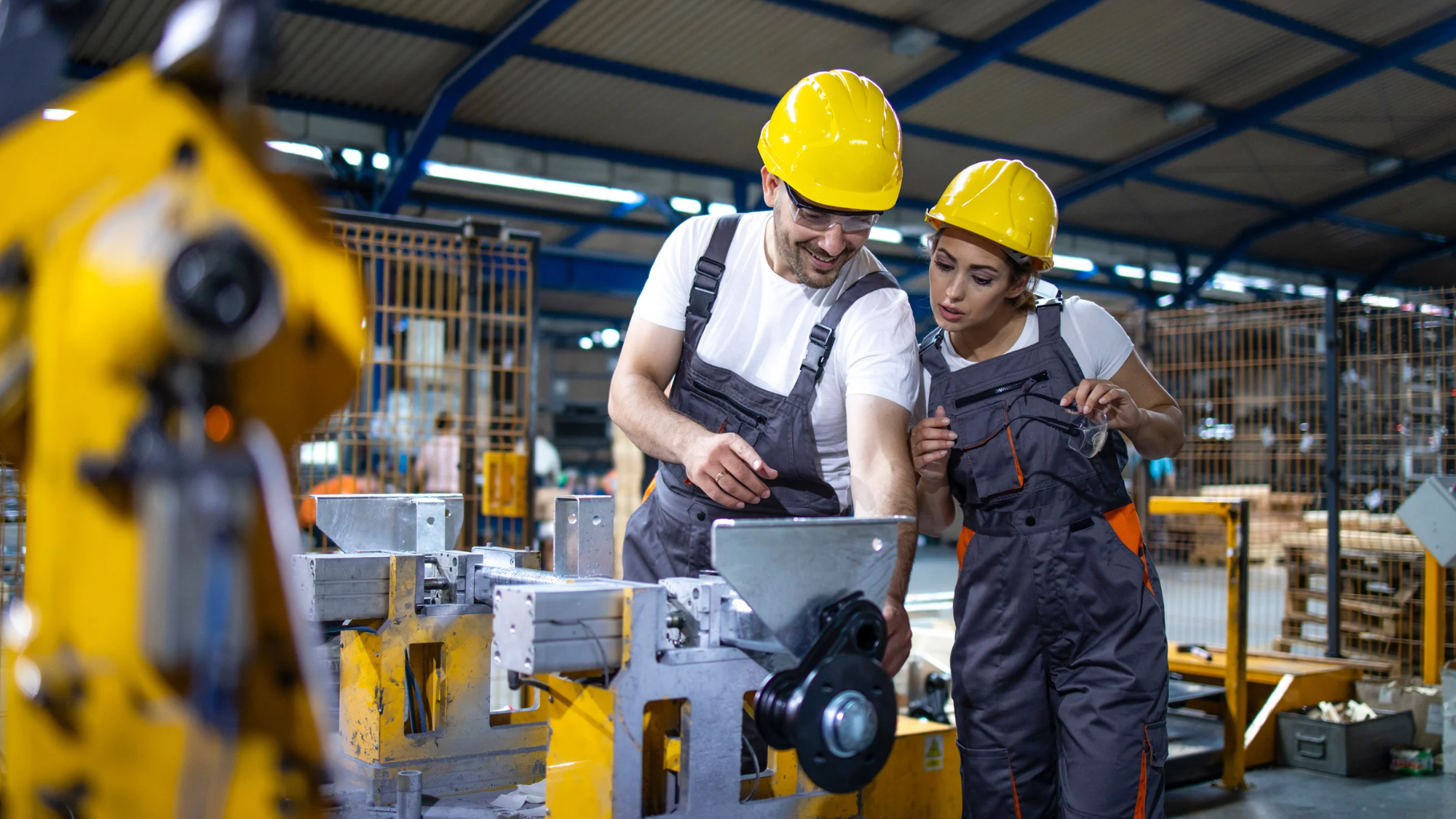
When experienced workers are difficult to find, employers may need to look beyond who can do the job today and consider who has the potential to learn it tomorrow.
Hiring in mining, cement manufacturing and other heavy industries often begins with experience. How many years has the candidate worked in an industrial environment? Have they operated this particular equipment? Do they already understand the process? Have they performed this exact job before?
For positions requiring specialized knowledge, certifications or demonstrated technical competency, those questions are essential.
But not every position requires a fully developed skill set on day one.
When employers struggle to find candidates who check every box, another quality becomes increasingly valuable: trainability.
A trainable employee isn’t simply someone without experience who is willing to accept a job. It’s someone who demonstrates the foundational behaviors, abilities and attitude needed to learn new responsibilities and eventually perform them safely and independently.
Recognizing those qualities can help industrial employers turn entry-level hiring into something much bigger: a pipeline for developing their future workforce.
Trainability Starts With Reliability
Before an employee can learn a new skill, they have to consistently be there to learn it.
Reliability may sound basic, but it is one of the foundations of employee development. Training requires an investment of time from supervisors, experienced coworkers and the organization itself. Frequent absences, tardiness or inconsistent performance make it difficult to build on that investment.
An employee who arrives on time, comes prepared and follows through on assigned responsibilities is demonstrating something valuable.
That doesn’t mean reliability automatically translates into technical ability. It does mean an employer has a stronger foundation on which to begin building those skills.
Look for the Ability to Follow Direction, and Understand Why
Heavy industry is not an environment where employees should improvise their way through unfamiliar work.
Procedures exist for a reason, particularly when employees are working around heavy machinery, conveyors, mobile equipment, elevated areas, electrical systems and other potential hazards.
A trainable employee needs to be able to receive instructions, retain information and apply what they’ve learned.
But the strongest candidates often go one step further: they want to understand why something is done a certain way.
An employee who asks thoughtful questions can be demonstrating engagement rather than uncertainty. Understanding the reasoning behind a process can help a worker recognize when conditions change or when something doesn’t look right.
The goal isn’t simply to produce employees who can repeat instructions. It’s to develop people who understand their responsibilities well enough to eventually work confidently and correctly.
Safety Awareness Has to Come Early
Someone can be mechanically inclined, hardworking and eager to learn while still being a poor fit for an industrial environment if they consistently disregard safety.
Trainability in heavy industry has to include the ability to learn and respect safety procedures.
New employees aren’t expected to recognize every hazard immediately. Developing that awareness is part of training. What matters is whether they take instruction seriously, use required PPE, communicate when they’re unsure and avoid taking shortcuts simply to complete a task faster.
One particularly valuable trait is knowing when to stop and ask.
In industrial environments, an employee who says, “I’m not sure how to do this safely,” can be far more trainable than someone who guesses because they don’t want to admit they need help.
Technical skills can develop with experience. A willingness to work safely needs to be reinforced from the beginning.
Communication Matters on an Industrial Crew
Heavy industry depends on people working together.
Employees need to receive instructions from supervisors, coordinate with coworkers, communicate hazards and speak up when they need clarification.
That makes communication another important part of trainability.
A good candidate doesn’t have to be the most outgoing person in the room. They do need to be able to listen, respond appropriately and communicate information when it matters.
This becomes increasingly important as employees advance. Someone who eventually becomes an experienced operator, maintenance employee, lead or supervisor will need more than technical ability. They’ll also need to communicate what they know to other people.
Today’s ability to listen and learn can eventually become tomorrow’s ability to teach and lead.
Trainability Isn't the Same as Lowering Standards
Hiring for potential doesn’t mean ignoring qualifications.
Some positions require licenses, certifications, experience or technical competencies before an employee can safely perform the work. Those requirements should remain requirements.
The opportunity lies in separating what must be known on day one from what can reasonably be taught over time.
If every qualification on a job description is treated as non-negotiable, employers may unintentionally eliminate candidates who possess the foundation to become strong long-term employees.
A better question might be:
Which skills does this employee absolutely need before starting, and which could we develop after hiring?
That distinction can expand the candidate pool without compromising the standards that truly matter.
Employers Have a Role in Trainability, Too
Finding someone with potential is only half of the equation.
An employer has to provide an environment where that potential can become capability.
Simply hiring an inexperienced employee and expecting them to “figure it out” isn’t workforce development.
Development requires structure.
That can include clear expectations, appropriate safety training, hands-on instruction, mentorship from experienced employees, regular feedback and opportunities to take on progressively more responsibility as competency improves.
Employers should also give employees a reason to keep learning.
When workers can see that additional skills may lead to greater responsibility, better opportunities or advancement, training becomes connected to a future rather than another task they are required to complete.
Your Next Skilled Employee May Already Be Wearing a Hard Hat
A general laborer may not be ready to operate specialized equipment today. A production employee may not yet have the knowledge to join the maintenance team. A new hire may have never worked inside a cement plant or mine.
That doesn’t tell an employer what the person could become.
Pay attention to the employee who consistently arrives ready to work. The one who asks good questions. The person who follows procedures even when nobody appears to be watching. The worker who wants to understand the equipment instead of simply completing the task in front of them.
Those behaviors can signal potential worth developing.
Over time, the employee who starts by supporting the operation may become an operator, welder, mechanic, technician, lead or supervisor, with the proper training and qualifications along the way.
Hire for What You Need. Develop What You'll Need Next.
Heavy industry will always need experienced workers. There is no substitute for the knowledge that comes from years spent mastering a trade or understanding an operation.
But employers cannot depend exclusively on finding fully developed workers every time a position opens.
Someone had to give today’s experienced employee the opportunity to become experienced.
For mining, cement and industrial employers, building a sustainable workforce means doing both: recruiting the skills the operation needs today while identifying people with the potential to develop the skills it will need tomorrow.
At ICR Staffing Services, we see candidates from many different work backgrounds. Not every candidate enters heavy industry with direct plant or mine experience, but previous hands-on experience, reliability, safety awareness and a willingness to learn can provide a foundation worth exploring.
The best candidate isn’t always the person who already knows everything. Sometimes, it’s the person who is ready to learn what comes next.