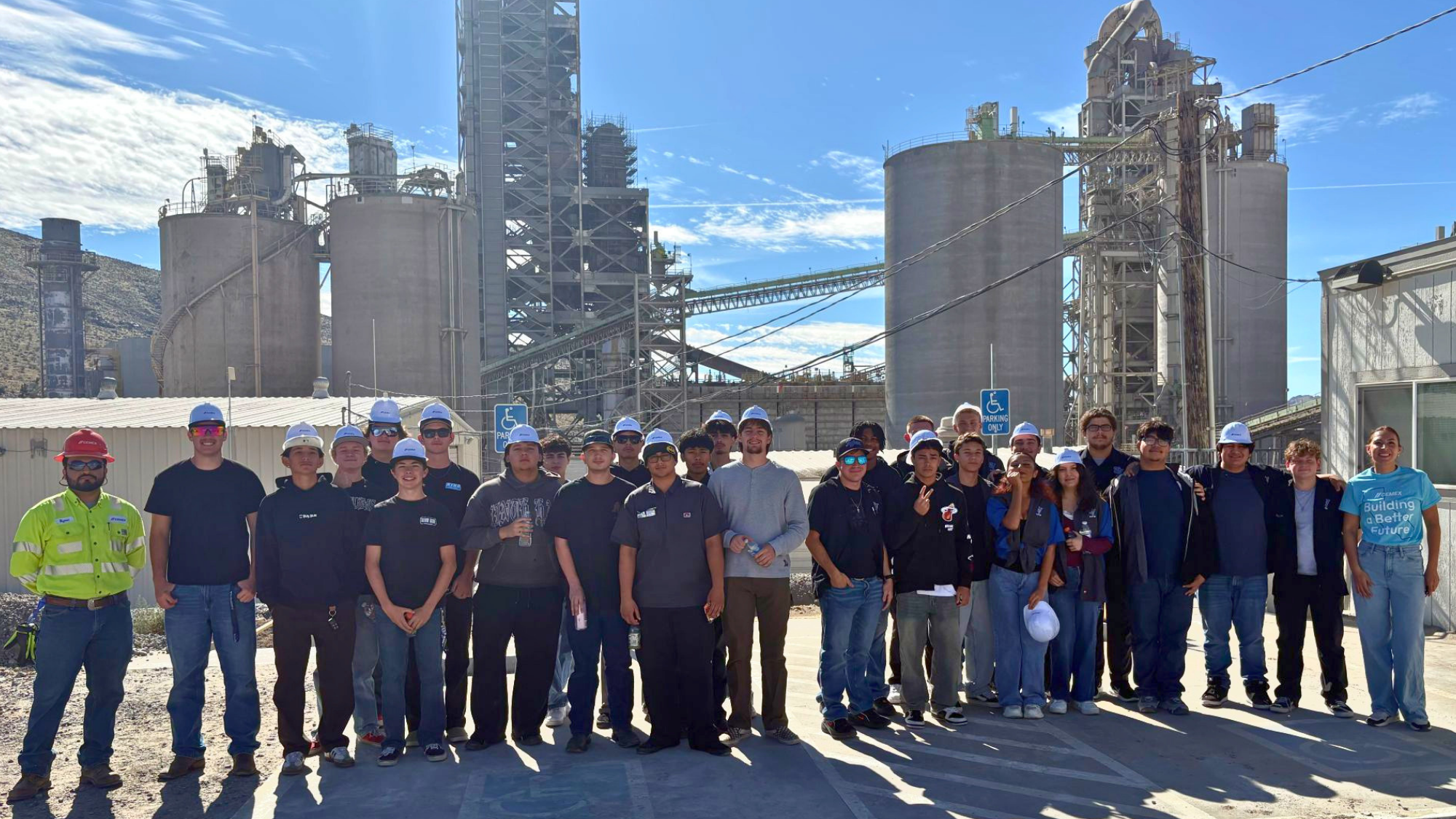
(Photo courtesy of Mountain Desert Career Pathways via Facebook)
As industries look toward the future, introducing young people to careers in mining, cement manufacturing and the skilled trades is becoming an increasingly important part of workforce development.
For many high school students, career exploration begins with the professions they already know. They may be familiar with careers in healthcare, business or technology, but have limited exposure to the opportunities available in manufacturing, mining and other heavy industries.
Yet these industries offer a wide range of career paths that rely on technical knowledge, problem-solving abilities and hands-on skills.
Introducing students to these opportunities before they enter the workforce can help broaden their understanding of what a successful career might look like.
That was the focus of a recent industry tour organized through Mountain Desert Career Pathways (MDCP) in partnership with CEMEX, which welcomed students from Silver Valley and Apple Valley High Schools to explore careers in cement manufacturing and mining at a facility in Apple Valley.
The experience offered students an opportunity to see industrial operations firsthand and begin connecting their classroom education with the skills employers need.
Changing How Young People See Skilled Trades
For decades, traditional four-year college pathways have often dominated conversations about career preparation. While college remains an important option, it is not the only route to a rewarding and sustainable career.
Skilled trades and industrial occupations offer opportunities for individuals who enjoy working with their hands, solving practical problems and learning through experience.
Careers involving welding, industrial electrical systems, mechanical maintenance and heavy equipment operations require specialized abilities that are developed through education, training and on-the-job experience.
However, students may never consider these professions if they don’t know what the work involves or how to begin pursuing it.
Industry tours can help address that gap.
Seeing an industrial facility in operation allows students to look beyond job titles and understand the people, equipment and technical knowledge involved in producing essential materials.
It can also challenge the misconception that industrial careers consist only of physically demanding labor. While many positions require physical endurance, modern facilities also depend on employees with strong technical, mathematical and analytical skills.
Bringing Classroom Lessons Into the Workplace
One of the greatest benefits of industry exposure is helping students understand why the subjects they study matter beyond graduation.
At a cement or mining operation, mathematics, mechanical principles, electrical knowledge and technical problem-solving all have practical applications.
A student interested in welding may discover how fabrication and equipment repair support industrial maintenance. Someone studying electrical systems may begin to understand their importance in machinery and production processes.
Others may develop an interest in equipment operations, industrial safety or maintenance after seeing how different departments contribute to the overall facility.
Through the recent CEMEX tour, students from Silver Valley and Apple Valley High Schools were introduced to real-world operations and the variety of career pathways available within the industry.
Experiences like these can make technical education more meaningful by showing students how their developing skills may translate into future employment.
Why Early Career Exposure Matters
Industrial employers face an ongoing need to attract and develop employees with the skills required to operate and maintain increasingly complex equipment.
At the same time, experienced workers eventually retire, change industries or move into different roles, creating a continued need for new talent.
Preparing the next generation of industrial workers requires more than waiting for qualified applicants to enter the job market.
It begins by introducing students to potential careers early enough for them to explore relevant classes, technical programs and training opportunities.
When young people understand the possibilities available in skilled trades, they can make more informed decisions about their education and career preparation.
Early exposure also gives students time to develop realistic expectations about industrial work, including the importance of safety, reliability, teamwork and continued learning.
Not every student who visits a cement plant will pursue a career in manufacturing or mining. But providing that exposure ensures these industries become part of the conversation when students consider their futures.
The Role of Industry and Education Partnerships
Programs such as Mountain Desert Career Pathways demonstrate how collaboration between schools and employers can strengthen career exploration.
Educators help students develop foundational knowledge and technical skills, while industry partners provide insight into how those abilities are applied in professional environments.
By opening its facility to students, CEMEX offered a firsthand introduction to an industry that supports construction, infrastructure and numerous related occupations.
These partnerships can also help employers communicate what they look for in future employees, from technical preparation and problem-solving abilities to dependability and a willingness to learn.
For schools, that information can help reinforce the connection between classroom instruction and workplace expectations.
For employers, participating in career exploration creates opportunities to introduce their industry to young people who may become part of the future workforce.
Creating Pathways, Not Just Filling Positions
Workforce development is often discussed in terms of immediate hiring needs, but long-term success also depends on building a pipeline of individuals interested in entering the industry.
That process can begin well before someone submits a job application.
Career presentations, facility tours, job shadowing, internships and partnerships with career technical education programs can all help students explore potential opportunities.
Employers can further support these efforts by communicating the skills needed for entry-level positions and explaining how employees may progress into more specialized roles through appropriate training and experience.
For industries such as cement manufacturing and mining, this approach is particularly valuable because many career paths involve skills that take time to develop.
An entry-level employee may begin by learning basic facility operations and safety procedures before pursuing additional training in equipment operation, maintenance or another technical specialty.
Showing students that industrial careers can involve continued learning and professional growth may encourage them to consider opportunities they otherwise would have overlooked.
Investing in the Workforce of Tomorrow
The recent collaboration between Mountain Desert Career Pathways and CEMEX is an example of how local education and industry can work together to introduce young people to meaningful career possibilities.
For students, stepping inside an industrial facility can turn an unfamiliar profession into something they can see, understand and potentially pursue.
For employers, these experiences are an opportunity to build awareness of the technical careers and essential work that support their operations.
The future of the skilled trades will depend not only on training the employees already working in industry, but also on inspiring those who have yet to enter it.
The next generation of welders, mechanics, electricians and equipment operators may still be sitting in high school classrooms today. Giving them a chance to see where their skills could lead is one of the first steps toward building tomorrow’s industrial workforce.